
A strategic perspective from Carely Digital
Healthcare growth depends on the whole patient journey
Why growth depends not only on attracting patients, but on how they understand their options, experience care and stay connected over time.
Differentiation extends beyond treatment
Clinical expertise and technology remain essential. Patients also judge how clearly they are guided, how well they are understood and whether support continues beyond the appointment.
-
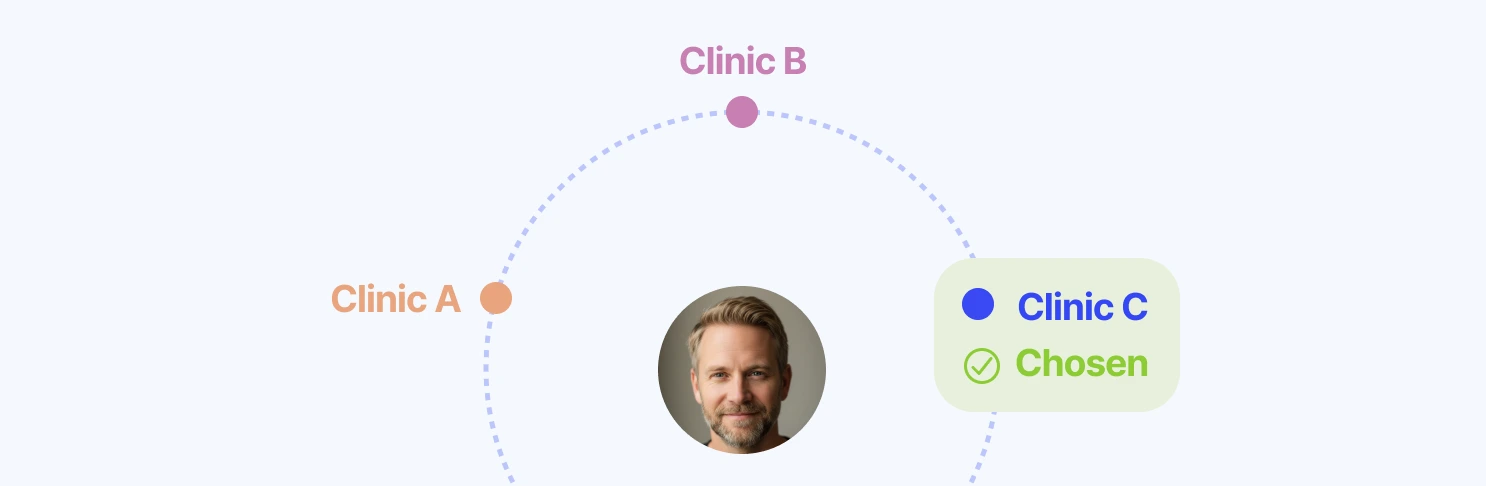
Patient choice
Patients compare more than treatments and prices. The clarity of information, ease of contact and response to their concerns help shape confidence in a provider.
-

Life between visits
Treatment plans meet everyday routines outside the clinic. Patients need guidance they can understand and use when questions arise, motivation changes or the next step feels unclear.
-
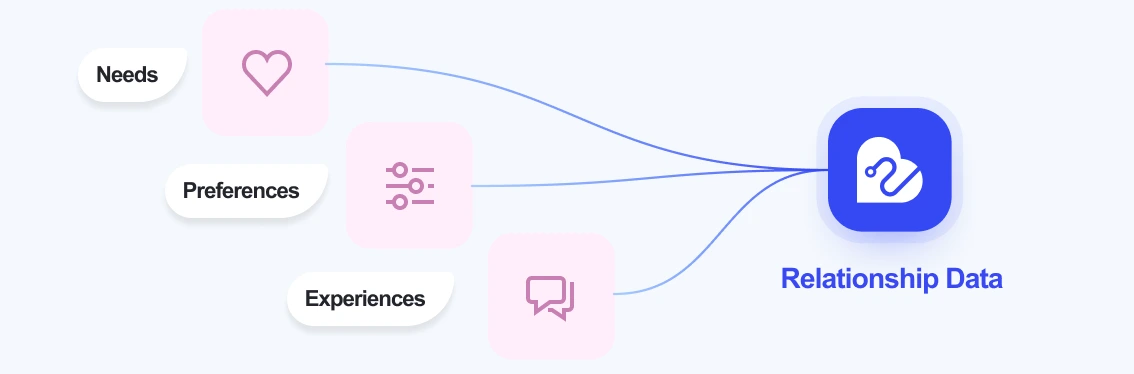
Data and trust
Direct patient relationships create valuable information about needs, preferences and experiences. Its value depends on how transparently it is collected, responsibly managed and kept useful over time.
-
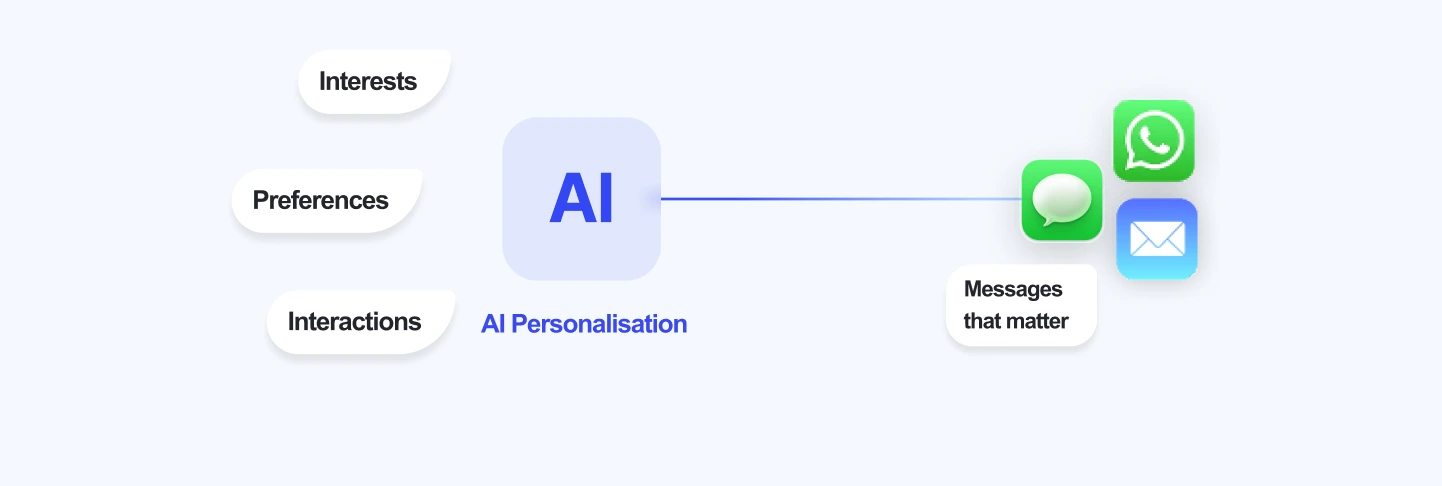
AI personalisation
AI can tailor communication using a patient’s interests, preferences and previous interactions. A connected history provides context that an isolated message or campaign cannot.
The opportunity is to manage the whole patient relationship, not just the individual moments within it.
One journey
One patient. One continuous journey. Three operational phases.
Healthcare growth is no longer driven by acquisition alone. It depends on how well the patient relationship is supported before, during and after treatment.
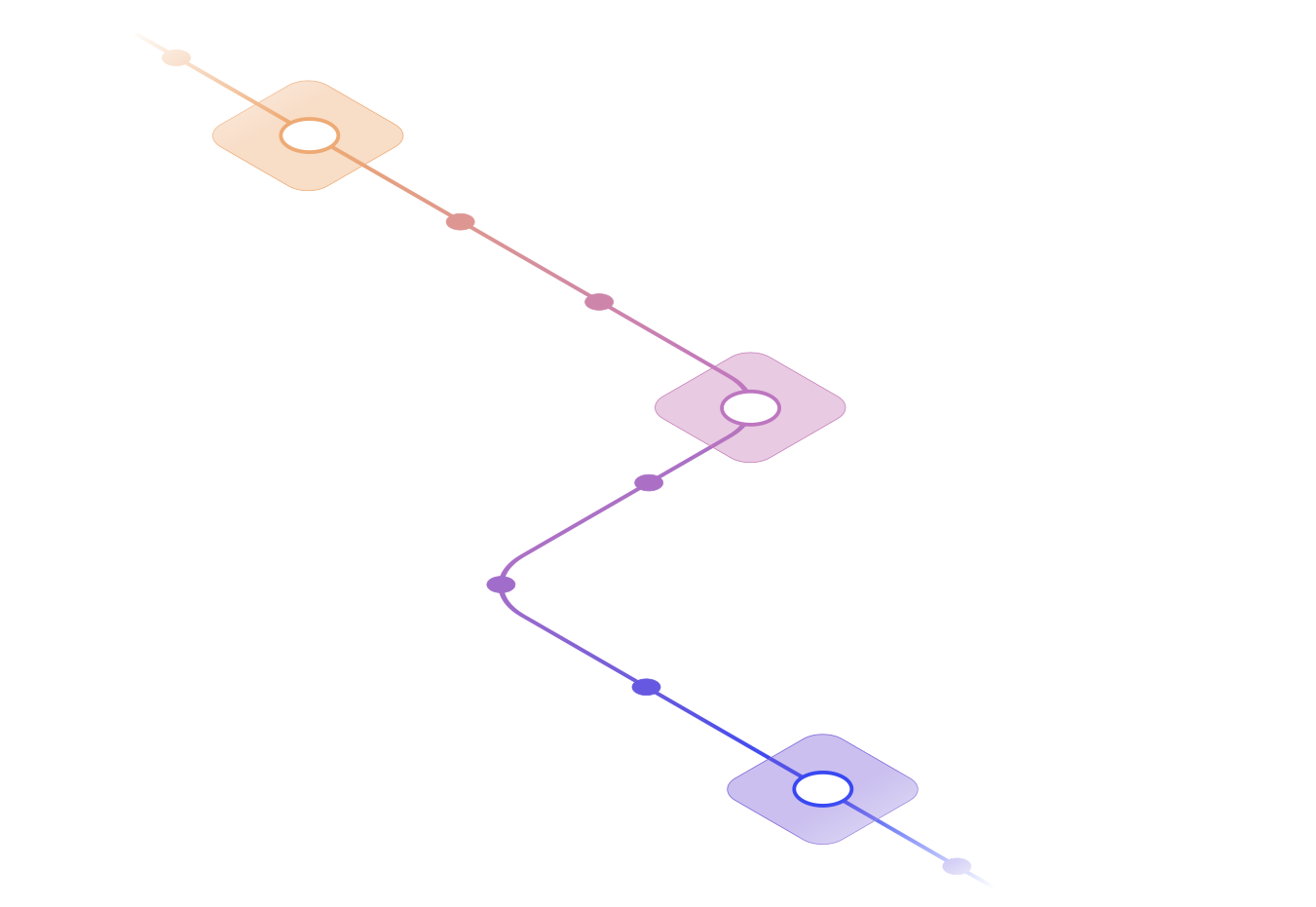
Exploration
Before clinical contact. Search, comparison, trust, access and the first inquiry.
Organic content Paid ads Lead generatorsTreatment
From booking through follow up. Consultation, procedure, coordination and care.
Online booking First visit Treatment scheduled Treatment completedConnection
Beyond treatment. Recovery, adherence, prevention, future needs and recommendations.
Referrals and reviews Relationship nurturing
Each phase is managed by different teams and systems. In networks and hospitals, the same relationship extends across locations and departments.
The relationship is continuous for the patient, but its context is fragmented for the organisation.
The challenge
The cost of fragmentation
When interactions stay in separate systems, it becomes harder to understand what drives treatment decisions, maintain a personal relationship and support patients between visits
-
Growth
When inquiry sources and treatment data remain separate, providers struggle to see which marketing contributes to revenue and where potential patients stop progressing towards treatment.
-
Relationship
When previous conversations and preferences are not available, patients may need to explain themselves again. Communication feels less personal, making trust harder to build over time.
-
Adherence
When guidance is disconnected from the patient’s stage of treatment, it can arrive too early, too late or without relevant context. Patients have less practical support for following their plan.
A connected approach
Manage the relationship, not just the individual moments
Connecting the patient journey means more than bringing systems together. It means planning how patients are supported, how their context carries forward and how progress is measured.
Plan beyond the appointment
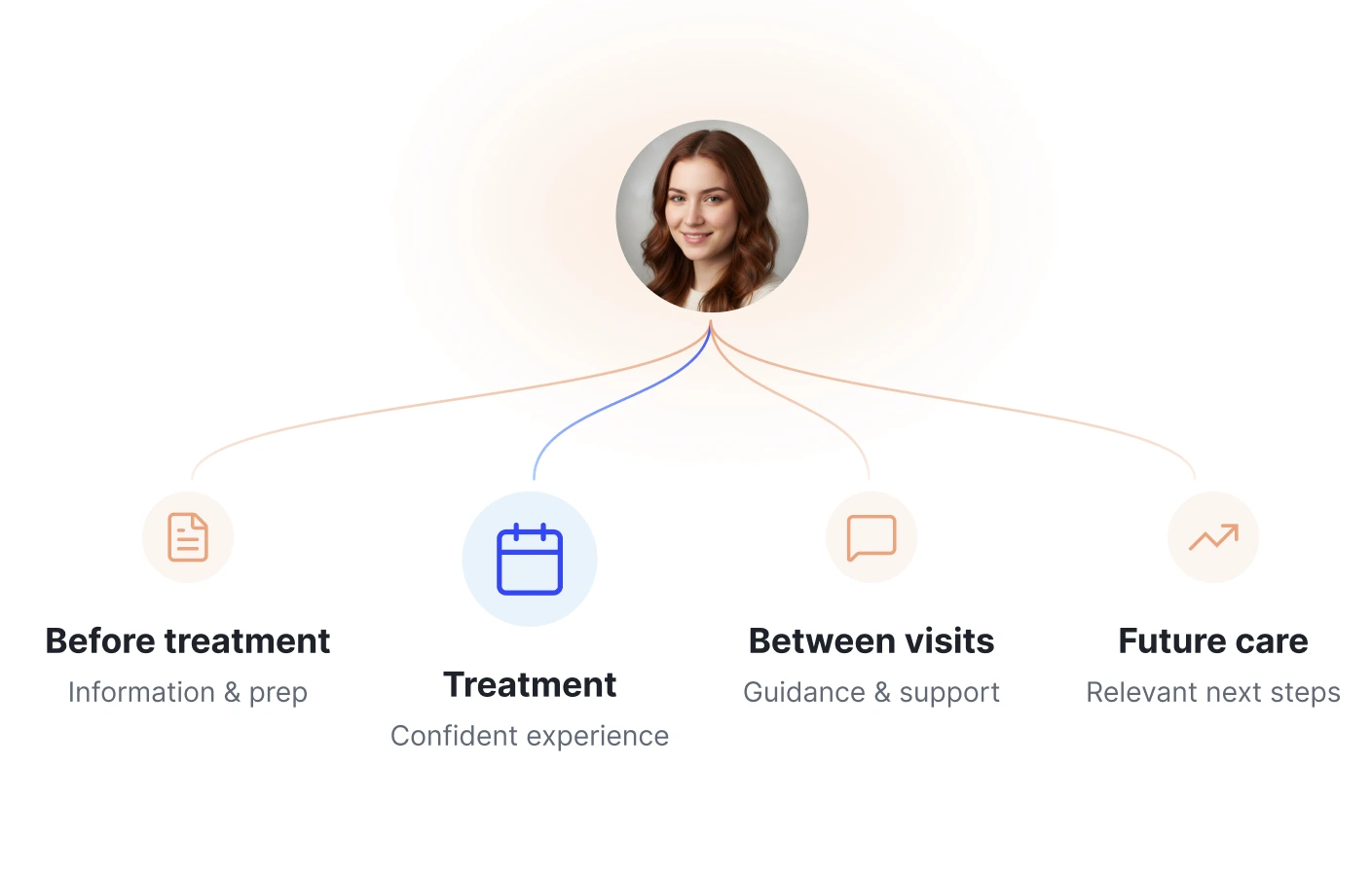
Consider what patients need to understand before treatment, what support they need between visits and when future care becomes relevant. Design these moments as parts of one relationship, rather than separate campaigns or reminders.
Carry context across transitions
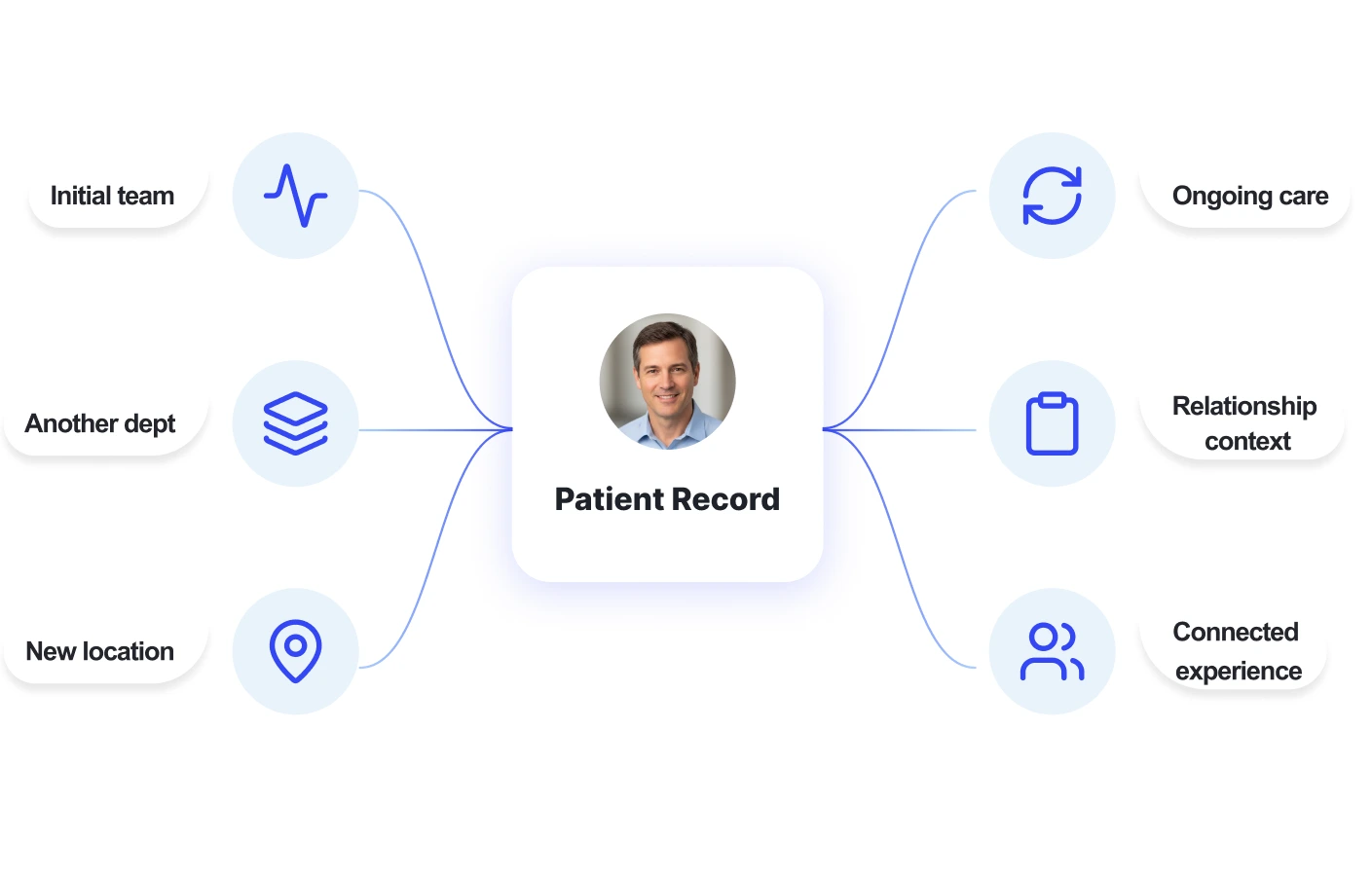
A change of team, department or location should not mean starting the conversation again. Relevant questions, preferences and previous interactions need to remain available to those continuing the relationship.
Measure the whole journey
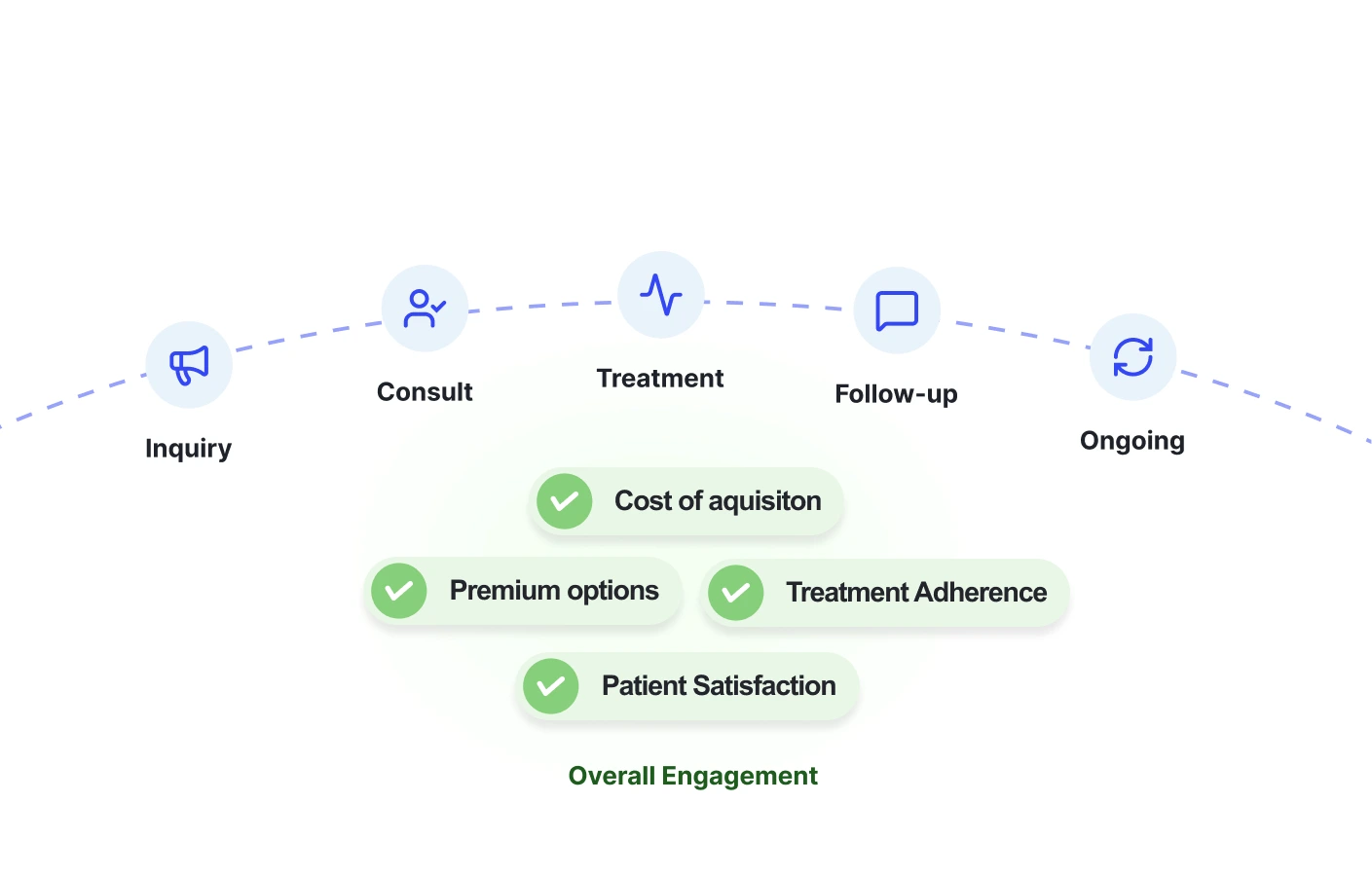
Look beyond clicks, bookings or message opens in isolation. Connect inquiry sources to completed treatments, and assess ongoing engagement through relevant measures such as patient responses, planned assessments and programme renewals
Putting the connected journey into practice
Carely is a longitudinal patient relationship database. It connects interactions across existing systems and uses that history to run personalised communication and measure engagement across the journey.
See how the platform works


See the connected journey in practice
Join a live online demo with our team to see how Carely supports your patient journeys. For a review of your current systems and communication, apply for a free audit and share your organisation’s priorities.
Hosted in the EU on AWS · ISO 27001 certified · GDPR by design.
FAQ
Common questions, answered directly.
What is a patient engagement platform?
A patient engagement platform unifies the full patient journey, from acquisition through treatment to long-term continuity, on one first-party data foundation. It sits above the clinical system, integrates with it, and orchestrates the communication that holds the relationship together.
How is Carely different from a CRM?
A CRM tracks deals and contacts. Carely tracks a care relationship: the inquiries, programmes, clinical events and communication that build up over years, connected across the systems a provider already runs.
Is Carely AI-ready?
Yes. Carely’s AI runs in a controlled environment on Amazon Bedrock within the EU, uses the connected history to personalise communication, and keeps outputs reviewable before they reach a patient.
Which healthcare providers can benefit from Carely?
Specialty clinics, clinic networks and hospitals that treat patients over time, and longevity or programme-based providers where the relationship continues well beyond a single visit.
Where is patient data hosted?
In the EU, on AWS. Your organisation remains the data controller and Carely acts as processor under a data processing agreement. Patient data is not shared with model providers or used to train foundation models.
Have another question? Contact our team